
Aim: African Journal of Health Economics, Systems and Policy (AJHESP) is a peer-reviewed, Open Access journal dedicated to advancing rigorous, policy-relevant scholarship at the intersection of health economics, health policy, and health systems. AJHESP provides a home for applied research that bridges the persistent gap between evidence production and financing reform. AJHESP fills a gap no indexed journal currently occupies: a dedicated platform for scholarship that treats African health financing, policy, and systems problems as the primary intellectual agenda. The journal operates in English and French — a commitment to the linguistic reality of the African.
Prior to submit your first article, you should apply for a user name and password. AJHESP offers a user friendly process for online submission through the PAMJ Manuscript Hut ™.
Submitted manuscripts will be initially screened by an editor for adherence to the journal´s instructions or identification of gross deficiencies. At this stage, the corresponding author can be contacted by the editorial office for clarification or the manuscript can be rejected. Once this initial screening is completed, manuscripts are sent to two-three referees; if appropriate, a statistical reviewer is involved. On average, we will report back to authors within 6 weeks with a first decision. Authors should however note that the average duration from submission to publication is roughly 3 months (1 - 6 months). We encourage authors not to contact the editorial office less than 6 weeks after the initial submission. We discourage and will ignore requests by authors to speed up the publication process for a particular manuscript.
Manuscripts must be submitted by one of the authors of the manuscript, and should not be submitted by anyone on their behalf. The submitting author takes responsibility for the article during submission and peer review.
Languages of publication are English and French. All manuscripts in French should include an English translation of the title, abstract and keywords. Poor English of French do not prevent acceptance provided the paper's content is of high scientific quality; we however strongly encourage authors to have their manuscript reviewed by a fluent English speaker and writer to improve its language contents prior to submission. All accepted manuscripts are copy-edited.
To facilitate rapid publication and to minimize administrative costs, PAMJ journals accepts only online submission. The submission process is compatible with all the latest browsers. Ensure that JavaScript is enable in your browser.
Files can be submitted as a batch. The submission process allows the authors to interrupt it at any time, and continue where they left off at their return on the site.
During submission you will be asked to provide a cover letter. Use this to explain why your manuscript should be published in the journal and to elaborate on any issues relating to our editorial policies detailed in the instructions for authors.
Assistance with the process of manuscript preparation and submission is available from the customer support team (sales-service@panafrican-med-journal). We also provide a collection of links to useful tools and resources for scientific authors, on our resources for authors page.
AJHESP
content licensing: Articles published in PAMJ Journals are Open Access and distributed under the terms of the Creative Commons Attribution 4.0 International (CC BY 4.0), which permits unrestricted use, distribution, and reproduction in any medium, provided the original work is properly cited..
Authorship and submission approval
The submitting author is responsible for ensuring that the full names and correct, accessible institutional email addresses for all contributing authors are provided during the initial submission process. Upon submission, all listed co-authors will receive an automated notification via email and are required to formally approve the submission through the PAMJ editorial system to signify their consent and contribution. Please be advised that the addition of any new authors to the manuscript is strictly prohibited once the submission is complete. However, requests to modify the sequence or order of the existing author list may be considered post-submission, provided that a written agreement signed by all contributing authors is submitted to the editorial office.
Online submission
PAMJ Journals only accept online submissions. Click here to access the Online Manuscript Submission System. Simple onscreen instructions are provided. If you experience problems with the online submission system, send an email to editor@africanjhesp.org
. Do not send your manuscript to that email address, it will be ignored.
Conflicts of interest
Will be mentioned in the manuscript as "Authors declared they have no conflicts of interest" if the authors have no competing interest. Otherwise state the relevant competing interest for all authors.
Download the journal manuscript template to help you format your manuscript.
Maximum length: 4000 words in main text (i.e., excluding abstract, references, legends, tables and figures), 4 tables/figures maximum, and a structured abstract of 250 words plus up to 50 references.
Title page - This page should states: a) The title of the paper (include the study design if appropriate; for example: A versus B in the treatment of C: a randomized controlled trial; X is a risk factor for Y: a case control study), b) Authors names (full name - no qualification, no abbreviations). Strictly follow this order: First Name, Middle name (if ever), Last Name. E.g.: Paul Kevin Akuna), c) institution(s) of origin, d) Corresponding author plus his/her address, telephone and fax number, e-mail address, e) Word count (for both abstract and the main text)
Abstract - The abstract of the manuscript should not exceed 250 words and must be structured into separate sections: Background: the context and purpose of the study; Methods: how the study was performed and statistical tests used; Results: the main findings; Conclusion: brief summary and potential implications. Please minimize the use of abbreviations and do not cite references in the abstract.
Keywords. Up to ten keywords should be provided at the end of the Abstract. The keywords should be Medical Subject Headings (MeSH®) Terms. Use the MeSH on Deman Tool to help suggest keywords.
Abbreviations a list of abbreviations is not accepted. Define abbreviations the first time they are used in the text and use them thereafter. No abbreviations in the abstract except for vary know ones.
Background The background section should be written from the standpoint of researchers without specialist knowledge in that area and must clearly state - and, if helpful, illustrate - the background to the research and its aims. Reports of clinical research should, where appropriate, include a summary of a search of the literature to indicate why this study was necessary and what it aimed to contribute to the field. The section should end with a very brief statement of what is being reported in the article.
Methods Sufficient information should be given to permit repetition of the experimental work. This should include the design of the study, the setting, the type of participants or materials involved, a clear description of all interventions and comparisons, and the type of analysis used, including a power calculation if appropriate.
Results - The Results should be stated concisely without discussion and should not normally contain any references. The same data should not be presented in figures and tables. Do not repeat all the data that is set out in the tables or figures in the text; emphasize or summarize only important observations.
Discussion - The Discussion should deal with the interpretation of the results and not recapitulate them. We encourage authors to write their Discussion in a structured way, as follows:a) statement of principal findings; b) strengths and weaknesses of the study; c) strengths and weaknesses in relation to other studies; d) discussion of important differences in results; e) meaning of the study; f) unanswered questions and future research.
Limitations - Always aknowledge the potential the limitations of your study that and how they impact or influence the interpretation of the findings from your research, the generalizability, applications to practice, and/or utility of findings.
Conclusion - The conclusion should provide a brief summarize of the key findings, potential implications and the way forward.
What is already known on this topic: include a maximum of 03 bullet points on what is already known on this topic.
What this study adds: include a maximum of 03 bullet points on what your study adds.
Acknowledgements - Please acknowledge anyone who contributed towards the study by making substantial contributions to conception, design, acquisition of data, or analysis and interpretation of data, or who was involved in drafting the manuscript or revising it critically for important intellectual content, but who does not meet the criteria for authorship. Please also include their source(s) of funding. Please also acknowledge anyone who contributed materials essential for the study. The role of a medical writer must be included in the acknowledgements section, including their source(s) of funding. Authors should obtain permission to acknowledge from all those mentioned in the Acknowledgements. Please list the source(s) of funding for the study, for each author, and for the manuscript preparation in the acknowledgements section. Authors must describe the role of the funding body, if any, in study design; in the collection, analysis, and interpretation of data; in the writing of the manuscript; and in the decision to submit the manuscript for publication.
Competing interest - Authors are responsible for recognizing and disclosing conflicts of interest that might bias their work. They should acknowledge in the manuscript all financial support for the work and other personal connections. Authors are required to complete a declaration of competing interests. All competing interests that are declared will be listed at the end of published articles. Where an author gives no competing interests, the listing will read 'The author(s) declare that they have no competing interests'. When completing your declaration, please consider the following questions:
Financial competing interests
Authors' contributions - In order to give appropriate credit to each author of a paper, the individual contributions of authors to the manuscript should be specified in this section. The Uniform Requirements for Manuscripts Submitted to Biomedical Journals (URM) of the International Committee of Medical Journal Editors (ICJME) recommends the following criteria for authorship (Learn more about the URM on Authorship and Contributorship):
References - References must be numbered consecutively, in square brackets (like this [1], or this [2,3] or even this [4-7]), in the order in which they are cited in the text, followed by any in tables or legends. Reference citations should not appear in titles or headings. Each reference must have an individual reference number. Preferably, limit the number of references to 50. If automatic numbering systems are used, the reference numbers must be finalized and the bibliography must be fully formatted before submission. We encourage authors to use a recent version of EndNote (version 5 and above) or Reference Manager when formatting their reference list, as this allows references to be automatically extracted. Examples of the PAMJ reference style are shown below. Please take care to follow the reference style precisely; references not in the correct style may be retyped, necessitating tedious proofreading.
We strongly advocate the use of Zotero, a free and open source reference management software which is a very good alternative to expensive ones.
Formatting book references: Use the format below to reference a book
Author of the book. Title of the book. Year of publication. Publisher Location. Publisher name
Example: Fleiss JL. Statistical methods for rates and proportions - 3rd edition. 2003. Hoboken. J Wiley
NB: Note the use of dots to separate the sections of the book reference.
Formatting web references: Use the format below to reference a web page
or a web site
Author of the page. Name of the source (if any). Year of data. url. Date link accessed
Example: SAS Institute. SAS 9. http://support.sas.com/software/index.htm. Accessed 10 April 2005
NB: Note the use of dots to separate the sections of the web reference.
Supplementary material/Appendices (if any) - Submit any supplementary material to the editorial office bye email. The editorial office can also decide which material will be published as supplemental material.
Tables (if any) - General instructions for tables.
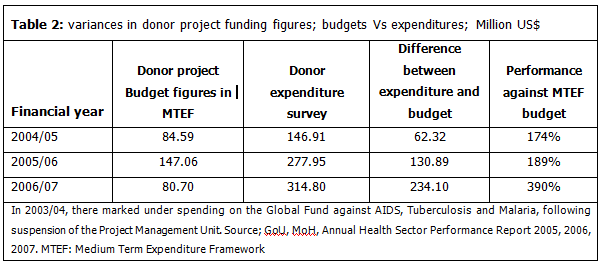
Figures (if any) - General instructions for figures.
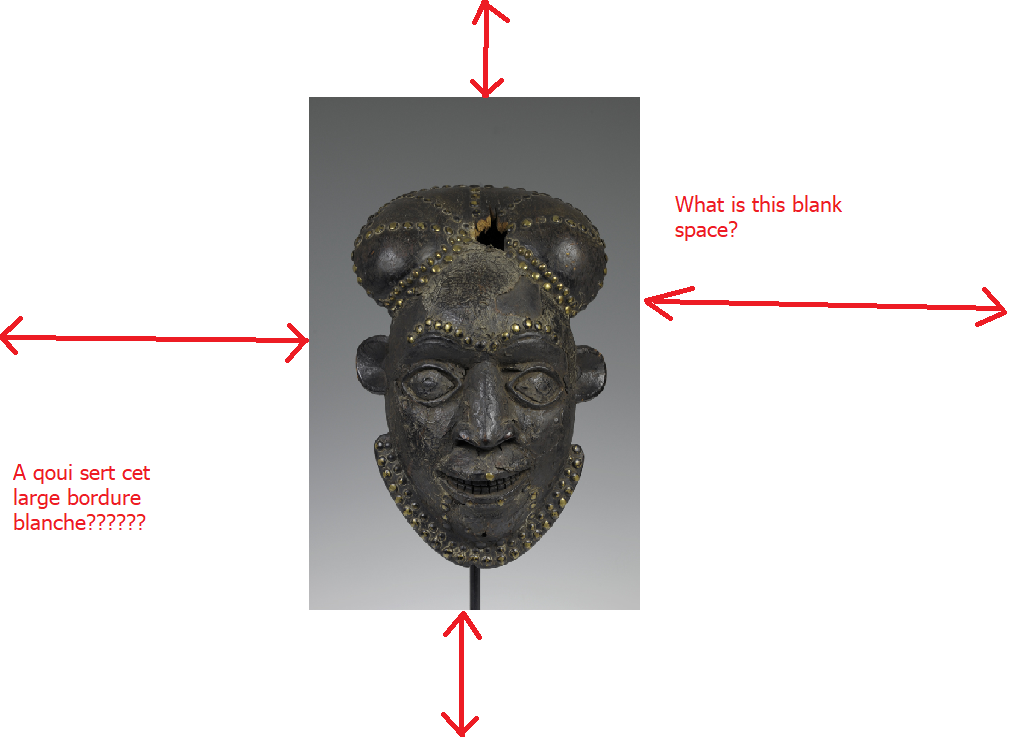
Examples of good and bad image with borders (Click on the images to enlarge)
| Good image | Bad image |

|
|
Files must be named with the three letter file extension appropriate to the
file type (eg: .jpeg, .png). You will be asked to provide figure labels during
the submission process. (The label is the small comment that usually goes with
the figure. Example: Figure 1: Prevalence of diabetes in the study population
aged 18 years and above. Findings of the TRICARE Diabetes Study, Uganda, 2006.)
If you use excel to generate your graph, avoid 3D, crowded axes, colored background, strong grid etc.. Use Tahoma font (size 10 maximum) for all items in your graphs (Title, legend, axes etc..). Expand your Excel graph to obtain a large image, copy and paste it in Paint (Microsoft Paint), crop any white border and save the image as PNG or JPEG. Submit this image for your manuscript (don't forget to include the legends for each figure inside the main manuscript) Look at an acceptable formatted Excel graph here. See the detailed sample instructions for a nicely formatted Excel graph here.
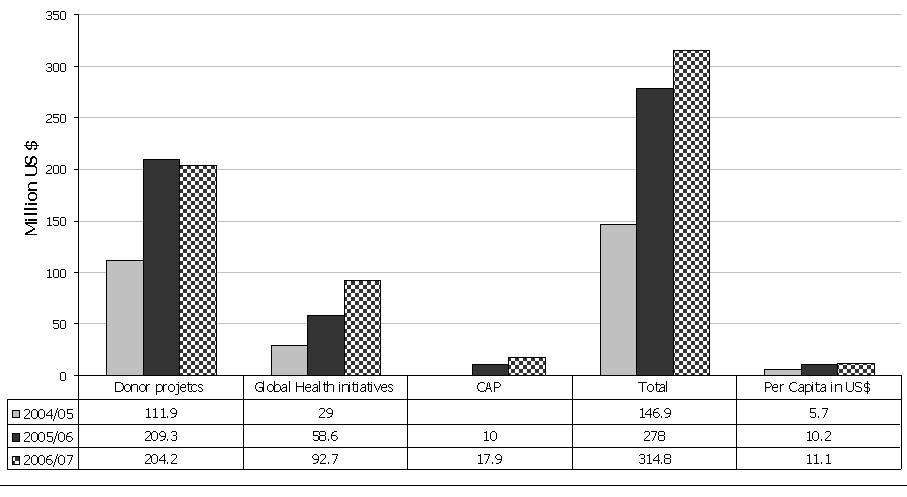
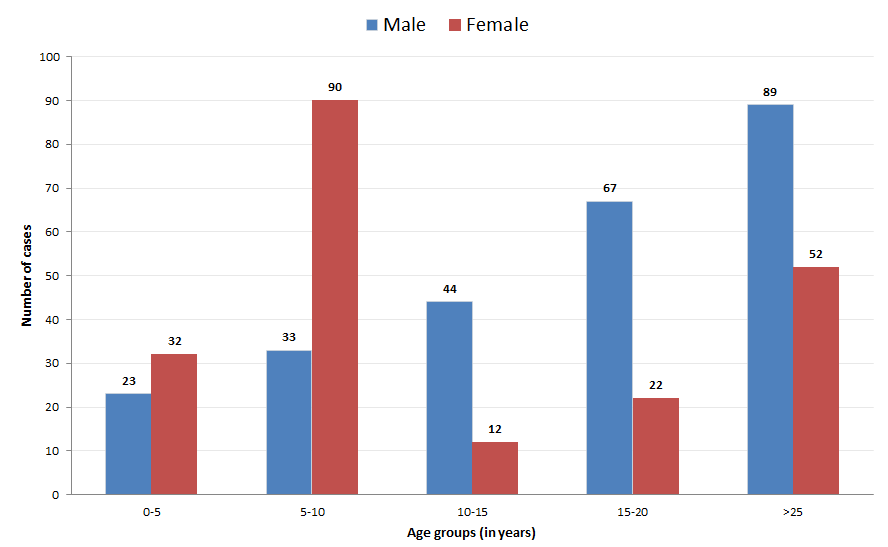
Consult the PAMJ submission checklist to ensure that your submission complies with our basic requirements.
When finalizing your research manuscript, ask yourself the following questions:
The STROBE Checklists provide good guidance on how to report observational research well. We strongly advise that you use them.
Unofficial French versions of some STROBE checklists are available here: STROBE Case-Control Studies | STROBE Cross Sectional Studies
Download the MS Word version of the STROBE checklists. Include the completed form as an annex to your submission.
| STROBE cross-sectional studies (English) | |
| STROBE case-control studies (English) | |
| STROBE cohort studies (English) | |
| STROBE études transversales (Francais) | |
| STROBE étude cas-témoins (Francais) |
For qualitative Studies, we recommend the use of the Consolidated criteria for reporting qualitative research (COREQ), available at the Equator Network.
Report Preliminary or novel findings may be reported as (up to 800 words
in main text, 2 tables/figures, and an abstract of up to 80 words). The
following structure applies to a brief: Abstract, Brief, Competing interests,
Authors’ contributions, Acknowledgments (if any), Tables and figures
(if any, maximum 1 table and 1 figure), References (not more than 15 references).
Download the brief template.
AJHESP
approach to case studies is wide. Case studies are used mainly for educational purposes. We broadly distingue three main types of case study:
Type 1: A fictional problem purely for education purposes.
Type 2: The Analytical Approach examines a situation in order to try and understand the what and why. This approach do not necessarily propose solutions to the problem.
Type 3: The Problem-Oriented Method identifies the major problems that exist and suggest solutions to these problems.
Depending on the type of Case Study, the following structure is suggested:
Download the Case study paper template.
Follow the same instructions as letter to the editor, with up 2500 words in main text, 2 tables/figures, and an unstructured abstract of 120 words.
An editorial is an article written by or on behalf of the editors that gives an opinion on a topical issue. Editorials are usually solicited. Contact the editorial office if you wish to submit an editorial to the journal.
The structure of an editorial typically includes:
Download the editorial template
An Essay is a scholarly piece of writing that presents a specific perspective, argument, or philosophical reflection on a topic of significance to the public health or scientific community. It should go beyond a simple description of a topic to provide a critical analysis or a new synthesis of existing ideas.
A manuscript submitted as an essay should adhere to the following requirements:
While the essay format is more flexible than an original article, it must maintain a rigorous scientific structure:
Definition and scope: A Letter to the Editor is a brief communication providing a decisive observation, a critique of a recently published article in the Pan African Medical Journal (PAMJ), or an opinion on a matter of urgent public health importance in Africa. Letters should not report original research that warrants a full "Original Article" or "Short Communication."
Submission requirements
Text body
The text should be a continuous narrative without sub-headings (e.g., No "Methods" or "Results" sections). It should follow this logical flow:
References: Should be kept to the minimum (at most 10). The first reference must be the article being commented on (if the letter is about a published article).
Editorial process: Letters to the Editor are peer-reviewed internally by the editorial board or by the authors of the original article (in the case of a commentary). The Editor-in-Chief reserves the right to edit letters for length, clarity, or tone.
A narrative review is a review method in which the researchers summarize different primary studies. Articles submitted as narrative review should adhere, as much as possible, to the Preferred Reporting Items for Systematic Reviews and Meta-Analyses (PRISMA) guidelines.
A maximum of 5000 words in the main text (i.e. excluding abstract, references and legends) plus up to 100 references. See the Section on Systematic Reviews and Meta Analysis for the PRISMA guidelines
An opinion piece is a short article providing the personal opinion of the author on a subject of interest. Opinion article may be solicited or not. The following structure applies to an opinion piece: Abstract, Opinion, Competing interests, References (not more than 5 references). Contact the editorial office if you wish to submit an opinion piece. Download the opinion template
A perspective essay is an essay where the author is asked to voice their opinion on a given topic. The topic chosen to provide a personal perspective about should be of clinical or public health interest to PAMJ readership. A perspective should not be based on the opinions of others, but should explicitly express the author's perspective or views. In the process of writing a perspective, the author should help readers understand how they form their opinion. A perspective is typically a non-technical document, easily understandable to a wide non-technical audience, so avoid using jargon. Use the first person (I, or we if more than one author). Use details and examples to illustrate your point.
A Policy Paper is an evidence-grounded analysis of a specific health financing, health systems, or health policy decision, reform, or challenge of direct relevance to African health systems. Unlike a research article, a Policy Paper is not structured around a hypothesis and a methodology: it is structured around a policy problem, a substantiated analysis of that problem, and explicit, actionable recommendations for decision-makers. The analysis must be grounded in evidence, but the primary audience is practitioners, policymakers, and institutional stakeholders — not only researchers.
A Policy Paper must address a health financing, systems, or policy question that is specific to — or has distinctive implications for — African health systems. Papers that apply global frameworks to African datasets without substantive engagement with the African institutional context will be desk-rejected. A Policy Paper that only describes a problem without proposing a way forward will not be accepted. Equally, a Policy Paper that proposes recommendations without engaging with the evidence that constrains or enables them will not be accepted.
AJHESP actively invites Policy Paper submissions from researchers, government officials, multilateral and bilateral partners, and civil society analysts who are working inside the systems they are writing about. Proximity to the policy problem is considered a strength.
A maximum of 1500 words in the main text (i.e. excluding abstract, references and legends) plus up to ten references and normally no more than
two illustrations (tables or figures or one of each). Otherwise in the same format as full-length original papers (see above).
Download short communication templates to help format your manuscripts.
Contrary to what it seems, review articles are some of the most challenging to write. Articles submitted to the PAMJ as systematic reviews and meta-analyses should adhere to the Preferred Reporting Items for Systematic Reviews and Meta-Analyses (PRISMA) guidelines.
A maximum of 5000 words in the main text (i.e. excluding abstract, references and legends) plus up to 100 references. Reviews are usually solicited, although unsolicited Reviews may be considered for publication. Prospective writers of Reviews should first consult the Editors.
Several PRISMA extensions exist that we invite prospective authors of reviews to consult and adhere to.
Download review templates to help format your manuscripts.
In addition, the PRISMA Website provides key documents for authors. Kindly ensure that your review follows these important guidelines
If you are asked to revise your manuscript you will be expected to provide a covering letter that responds in detail to each point raised by reviewers or editors, and to highlight new material in the text using a different color (do not use the Track Changes mode of Word). If a manuscript returned to the authors for revision is not returned to the Editorial Office within the stipulated time-period (usually 4 weeks), it will be treated as a new manuscript.
An email is sent to the corresponding author. Typographical errors only should be corrected. The corrected proof should be returned within 48 h. Failure to comply with this deadline will delay publication.
Verbatim material or illustrations taken from other published sources must be accompanied by a written statement from the author, and from the publisher if holding the copyright, giving permission to AJHESP for reproduction.
Consult the AJHESP copyright and licensing page.
We take the issue of plagiarism very seriously. All manuscripts submitted to the AJHESP are checked for plagiarism various tools and services including Ithenticate (through our partnership with CrossRef), Google search, and independent reports of suspected plagiarism. Suspected and reported instances of plagiarism will be investigated thoroughly, according to the COPE guidelines. Manuscripts confirmed with plagiarism can be removed from consideration for publication in the journal; actions against all the manuscript authors can also be considered. If the plagiarism is identified post-publication, the article can be retracted with a retraction notice published.
Any manuscript or substantial parts of it, submitted to AJHESP must not be under consideration by any other journal. The manuscript should not have already been published in any journal or other citable form, with that exception that the journal is willing to consider peer-reviewing manuscripts that are translations of articles originally published in another language. In this case, the consent of the journal in which the article was originally published must be obtained and the fact that the article has already been published must be made clear on submission and stated in the abstract. Authors who publish in AJHESP retain copyright to their work. Correspondence concerning articles published in AJHESP is encouraged.
Submission of a manuscript to AJHESP implies that all authors have read and agreed to its content, and that any research that is reported in the manuscript has been performed with the approval of an appropriate ethics committee. Research carried out on humans must be in compliance with the Helsinki Declaration, and any experimental research on animals must follow internationally recognized guidelines. A statement to this effect must appear in the Methods section of the manuscript, including the name of the body which gave approval, with a reference number where appropriate. Informed consent must also be documented. Manuscripts may be rejected if the editorial office considers that the research has not been carried out within an ethical framework, e.g. if the severity of the experimental procedure is not justified by the value of the knowledge gained. View our detailed research policy below.
Generic drug names should generally be used. When proprietary brands are used in research, include the brand names in parentheses in the Methods section.
We ask authors of AJHESP papers to complete a declaration of competing interests, which should be provided as a separate section of the manuscript, to follow the Acknowledgements. Where an author gives no competing interests, the listing will read 'The author(s) declare that they have no competing interests'. To learn more about competing interests the following articles provide some background:
For all articles that include information or clinical photographs relating to individual patients, written and signed consent from each patient to publish must also be mailed or faxed to the editorial staff. The manuscript should also include a statement to this effect in the Acknowledgements section, as follows: "Written consent for publication was obtained from the patient or their relative."
Manuscript are submitted through the PAMJ Manuscript Management Platform (The PAMJ Manuscript Hut). You will need the following to complete the submission of your manuscript:
We strongly encourage authors to use a reference software to format references.
Output styles for Reference Manager and EndNote are provided below. In case
these software aren't available, format your references manually.
A sample of the PAMJ reference style below [1,2].
Download journal output style for Reference Manager
Download journal output style for EndNote
Download journal output style for Zotero
Access the online Manuscript Submission System.
The AJHESP does not currently charge Article Processing Charges (APCs), submission fees, or any other costs associated with the publication of manuscripts. All accepted articles are published articles are immediately and permanently freely accessible to the global scientific community.
Supplement publication fees
The AJHESP
applies a progressive costing structure for the publication of supplements. The cost of publishing a supplement is determined on a case-by-case basis and is guided by several factors, including the geographical location of the sponsoring organization, its institutional size, annual budget, and any specific requirements associated with the supplement (such as printing, shipping, or paid expedited external peer review). In line with PAMJ’s mission to promote equitable access to scientific publishing, lower publication fees are generally applied to small organizations from low- and middle-income countries (LMICs), while higher fees may apply to large international organizations with greater resources. For detailed information on supplement costs or to request a tailored quotation, please contact the AJHESP
sales team at sales-service@panafrican-med-journal.com
For more on AJHESP article processing charges, contact the PAMJ sales office at sales-service@panafrican-med-journal.com.
AJHESP operates a double-blind peer review process for all submitted manuscripts. This means that the authors' identities are concealed from reviewers throughout the review process, and reviewers' identities are concealed from authors. The handling Associate Editor and the Co-Editors-in-Chief have access to authorship information at all times; reviewers do not.
This policy applies to all article types submitted to AJHESP: original research articles, systematic and scoping reviews, policy papers, methodological contributions, commentaries, and perspectives.
To protect the integrity of the double-blind review process, authors are required to submit two separate documents:
The title page is the only document that contains full author identification. It must include:
The title page is retained by the editorial office. It is not shared with reviewers at any stage of the review process.
The main manuscript file must contain no information that could identify the authors to reviewers, either directly or indirectly. Authors must ensure the following:
Direct identification — remove:
Indirect identification — handle carefully:
File properties — check before submission:
The AJHESP editorial team is responsible for verifying that submitted manuscripts are appropriately anonymised before they are assigned to reviewers. Manuscripts that contain obvious author-identifying information will be returned to authors for correction before the review process begins.
Associate Editors invited to handle a manuscript will be asked to declare any conflict of interest with the submitted work before accepting the assignment. If an Associate Editor recognises the authorship of a manuscript during review — whether from self-citations, study identifiers, or other cues — they are required to disclose this to the editorial office. The editorial office will then determine whether reassignment is appropriate.
Reviewers are similarly required to disclose any conflict of interest, including any belief that they have identified the authorship of a manuscript assigned to them. Reviewers must not attempt to identify authors and must not discuss a manuscript with colleagues outside the formal review process.
Reviewers invited by AJHESP will receive the anonymised manuscript only. They will not have access to the title page, author identities, institutional affiliations, or funding information at any stage of the review.
Reviewers are asked to assess the manuscript solely on the basis of its intellectual merit, methodological rigour, policy relevance, and contextual appropriateness. Any attempt to determine authorship, or to allow suspected authorship to influence the review, constitutes a breach of the review process and should be disclosed to the editorial office.
All editorial correspondence — including desk rejection notices, reviewer reports, and revision requests — will be addressed to the corresponding author identified on the title page. Reviewer reports shared with authors will not contain any information that identifies the reviewer.
Authors who believe that a reviewer has breached anonymity or shown evidence of bias in their assessment may raise this concern with the editors at editors@africanjhesp.org. The editorial team will investigate and respond.
Invited commentaries and perspectives commissioned by the editorial board are not subject to the double-blind process. For unsolicited commentaries and perspectives, the standard double-blind submission requirements apply. Authors should contact editors@africanjhesp.org if they are uncertain whether their submission is classified as invited.
AJHESP accepts and reviews submissions in both English and French. The double-blind anonymisation requirements are identical for submissions in both languages. Authors submitting in French should ensure that all direct or indirect identification is removed from the anonymised manuscript, including acknowledgements in French, French-language self-citations that could identify the author, and any institutional identifiers that are specific to a named French-speaking institution.
Authors are allowed to recommend 3 qualified reviewers for the peer review process. Adhering to the following guidelines will help you identify peer-reviewers for your manuscript:
The editorial office reserves the right to invite or not the recommended reviewers. The editorial office will also ensure that the recommended reviewers adhere to the guidelines above.
To guide the peer-review process, the AJHESP provides a checklist adapted from the Review Criteria for Research Manuscripts 2nd Edition (AAMC). the Reviewers are asked whether the manuscript is scientifically sound and coherent, how interesting it is and whether the quality of the writing is acceptable. Where possible, the final decision is made on the basis that the peer reviewers are in accordance with one another, or that at least there is no strong dissenting view. In cases where there is strong disagreement either among peer reviewers or between the authors and peer reviewers, advice is sought from a member of the journal's Editorial Board. The journal allows a maximum of two revisions of any manuscripts.
Reviewers are also asked to indicate which articles they consider to be especially interesting or significant. These articles may be given greater prominence and greater external publicity.
Check our reviewers page for more about the journal peer review process and how we reward peer reviewers.
All articles submitted to the African Journal of Health Economics, Systems and Policy should include a funding statement in the form of a sentence under a separate heading entitled “Funding”. If the research was supported by a founder or any other organization, kindly make sure the following elements appear if applicable: Funding Organization Acronym, Full Organization Name, Organization’s DOI (If applicable), Country, Contract or grant number [in square brackets].
Funding statement should ideally look like (these are examples):
Multiple grant numbers should be separated by comma and space:
Where the research was supported by more than one agency, the different agencies should be separated by semi-colon, with and before the final funder:
Where no specific funding has been provided for the research, the following sentence should be used:
Material and records created during the submission process will be archived. Once archived, these material will no longer be accessible to the submitting author through the journal panel. The duration of retention of records created during the submission process is as follow:
Authors willing to access these material would have to contact the editorial office of the journal.
We work closely with authors to make what we publish error-free.
When an article is published, the corresponding author receives an email and a correction request sheet which can be used to submit corrections to our online proof checking system if necessary. In each case, we make sure that corrections are handled as soon as possible.
All corrections are handled by the editor assigned to the article.
All other changes requested will be reviewed by the editorial team for appropriateness.
We publish corrections in Erratum and Corrigendum articles as soon as we can.
Once a manuscript is published, authors can request changes for; grammatical and orthographic errors, errors in the spelling of author names or affiliation, invalid or non-readable characters.
After a manuscript is published, AJHESP editors will not accept requests to change the order of authors, add new authors or remove authors.
Requests to make intensive changes anywhere in the text will be declined.
Retractions are considered by the AJHESP editorial office after assessing evidence of unreliable data or findings, plagiarism, duplicate publication, and unethical research practices.
The AJHESP editorial office may consider an expression of concern notice if an article is under investigation.
When a retraction notice is published in AJHESP , the retracted article and the PDF are watermarked with “retracted article” before the notice is submitted for indexation on databases where AJHESP content is deposited
Depending on the nature of the retraction, authors may also be banned from publishing in AJHESP for up to five (5) years.
The AJHESP is a member of the Committee on Publication Ethics (COPE) and follows the International standards for editors and authors [1] and COPE guidelines on investigating scientific misconduct.
CrossMark is a multi-publisher initiative from Crossref to provide a standard way for readers to locate the current version of a piece of content. By applying the Crossmark logo Publisher Name is committing to maintaining the content it publishes and to alerting readers to changes if and when they occur. Clicking on the Crossmark logo will tell you the current status of a document and may also give you additional publication record information about the document.
AJHESP participates in CrossMark, therefore, all published articles will display the CrossMark logo similar to the one below. By Clicking on the CrossMark logo you will get the current status of an article and will be directed to the latest published version.
CrossMark Logo 
All articles published in AJHESP receive a DOI. The contents of AJHESP is archived on various databases. Check the current archives list of the journal main page.
Whenever a published article needs to be corrected, the correction or retraction policies above will apply.
Conflicts and disagreements between authors themselves or between authors and the editorial team are inevitable. All conflicts will be handled according to the Committee on Publication Ethics Guidance. Authors are free to bring their grievance against the journal to COPE. As a member of the COPE, some issues between authors or between authors and the journal can be posted on COPE website as case studies, in accordance with COPE editorial policies.
All research articles submitted for consideration to all PAMJ journals should abide to basic research ethics as guided by international bodies such as:
The basic principles underpinning the ethical conduct at all stages of research are summarized below:
The Pan African Medical Journal adheres to the ethical principles and recommendations of the World Association of Medical Editors (WAME) and the JAMA Network regarding the responsible use of artificial intelligence in manuscript preparation, submission, peer review, and editorial decision-making. In accordance with these policies, AI tools cannot be listed as authors, and their use must be transparently disclosed in the manuscript (e.g., in the Methods or Acknowledgements). Authors remain fully responsible for the accuracy, originality, and integrity of any content generated with AI assistance, including text, images, data, and references. The use of AI tools in peer review or in ways that compromise confidentiality is strictly prohibited. Submissions that do not comply with these standards may be rejected.
Primary Health Care Practice Journal
African Journal of Health Economics, Systems and Policy
PAMJ Conference Management System

The Manuscript Hut is a product of the PAMJ Center for Public health Research and Information.
Kenya: 3rd Floor, Park Suite Building, Parkland Road, Nairobi. PoBox 38583-00100, tel: +254 (0)20-520-4356
Cameroon: Immeuble TechnoPark Essos, Yaounde, PoBox: 10020 Yaounde, tel: +237 (0)24-309-5880
Copyright © - Pan African Medical Journal - CEPHRI (Kenya). 2026
PAMJ One Manuscript Hut - (MMS V.4.0). Release date April 2026 - Customized for AJHESP.
For advertisers Contact the PAMJ sales service. Download our latest media-kit.
sales-service@panafrican-med-journal.com

 |
|
